Pattern recognition technology has revolutionized our digital world, yet its accuracy faces fundamental challenges that could reshape the future of artificial intelligence and machine learning applications.

🔍 The Current State of Pattern Recognition Technology
Modern pattern recognition systems have achieved remarkable milestones, from facial recognition unlocking smartphones to medical imaging systems detecting cancerous tissues. These technologies rely on sophisticated algorithms that identify patterns within vast datasets, enabling machines to make decisions with unprecedented speed and efficiency.
The foundation of pattern recognition lies in machine learning algorithms that process visual, auditory, and textual data. These systems have become integral to everyday applications, including voice assistants, autonomous vehicles, security systems, and recommendation engines that power streaming platforms and e-commerce websites.
Despite these achievements, the technology faces inherent limitations that researchers and developers continue to grapple with. Understanding these boundaries is essential for creating realistic expectations and developing more robust systems that can handle real-world complexity.
⚠️ Fundamental Challenges in Achieving Perfect Accuracy
Pattern recognition accuracy is constrained by several fundamental challenges that extend beyond simple technical limitations. These obstacles represent the intersection of mathematics, neuroscience, and practical engineering constraints.
Data Quality and Quantity Dilemmas
The accuracy of any pattern recognition system depends heavily on the quality and quantity of training data. Insufficient data leads to poor generalization, while biased datasets produce discriminatory outcomes that have real-world consequences. The garbage-in-garbage-out principle remains a critical consideration in modern AI development.
High-quality labeled data requires significant human effort and expertise. Medical imaging systems need radiologists to annotate thousands of images, while natural language processing models require extensive text corpora with proper context and semantic markup. This manual labor creates bottlenecks in developing accurate systems across specialized domains.
The Curse of Dimensionality
As pattern recognition systems attempt to process increasingly complex data, they encounter what mathematicians call the curse of dimensionality. High-dimensional data spaces become exponentially sparse, making it difficult for algorithms to find meaningful patterns without enormous computational resources and training examples.
This challenge manifests particularly in facial recognition systems attempting to account for variations in lighting, angles, facial expressions, aging, and accessories. Each additional variable increases the complexity exponentially, requiring substantially more data and processing power to maintain accuracy levels.
🧠 The Neural Network Paradox
Deep learning neural networks have pushed pattern recognition accuracy to new heights, yet they introduce their own set of limitations and paradoxes that challenge our understanding of artificial intelligence.
Black Box Problem and Interpretability
Modern neural networks operate as black boxes, making decisions through millions of weighted connections that humans cannot easily interpret. This lack of transparency creates challenges in regulated industries like healthcare and finance, where explainability is not just preferred but legally required.
When a pattern recognition system makes an error, understanding why it failed becomes crucial for improvement. However, the complexity of deep learning architectures often makes root cause analysis impossible, limiting our ability to systematically address accuracy issues.
Adversarial Attacks and Robustness Issues
Pattern recognition systems demonstrate surprising vulnerability to adversarial attacks—carefully crafted inputs designed to fool the algorithm. A self-driving car might misclassify a stop sign with strategically placed stickers, or a facial recognition system might be deceived by specific patterns on eyeglass frames.
These vulnerabilities reveal that pattern recognition systems don’t truly understand concepts the way humans do. They identify statistical correlations in training data rather than developing genuine comprehension, making them susceptible to manipulation through imperceptible perturbations.
🌐 Real-World Complexity and Edge Cases
Laboratory accuracy rarely translates directly to real-world performance. Pattern recognition systems face countless edge cases and environmental variations that challenge their reliability in practical applications.
Environmental Variability
Recognition systems trained in controlled environments often struggle with real-world variability. Lighting conditions, weather, occlusions, and background clutter all impact accuracy in unpredictable ways. A facial recognition system performing at 99% accuracy in ideal conditions might drop to 70% in crowded, poorly lit environments.
Audio pattern recognition faces similar challenges with background noise, accents, dialects, and acoustic environments. Voice assistants that work flawlessly in quiet rooms struggle with overlapping conversations, music, or traffic noise, limiting their practical utility in everyday situations.
The Long Tail Problem
Pattern recognition systems excel at identifying common patterns they’ve seen frequently during training but struggle with rare events—the statistical long tail. Yet many critical applications require accurate identification of precisely these uncommon occurrences, such as rare diseases in medical imaging or unusual threats in security systems.
Addressing long tail scenarios requires disproportionate amounts of training data and computational resources. Organizations must decide whether to optimize for common cases with high overall accuracy or invest heavily in handling rare but important edge cases.
📊 Measuring and Understanding Accuracy Limitations
Defining and measuring pattern recognition accuracy presents its own set of challenges, as different metrics capture different aspects of system performance.
The Precision-Recall Trade-off
Pattern recognition systems must balance precision (avoiding false positives) against recall (avoiding false negatives). Adjusting this balance changes what we consider “accurate” depending on application context. A cancer detection system might prioritize recall to avoid missing cases, accepting more false alarms, while a spam filter prioritizes precision to prevent legitimate emails from being blocked.
No single accuracy metric captures complete system performance. Developers must consider confusion matrices, F1 scores, area under ROC curves, and domain-specific metrics that reflect real-world costs of different error types.
Benchmark Limitations
Standard benchmarks like ImageNet have driven progress in computer vision, but they don’t fully represent real-world challenges. Systems that achieve state-of-the-art benchmark accuracy may still fail unexpectedly in production environments due to distribution shifts and dataset biases inherent in benchmark construction.
The community increasingly recognizes that chasing benchmark accuracy without considering robustness, fairness, and real-world performance creates systems that look impressive on paper but disappoint in practice.
🔬 Biological Inspiration and Its Limits
Many pattern recognition approaches draw inspiration from biological neural networks, yet the human brain operates fundamentally differently from artificial systems in ways that limit direct translation of biological principles.
Context and Common Sense
Humans leverage vast contextual knowledge and common sense when recognizing patterns. We understand that a person holding a banana is more likely eating it than making a phone call, even if the visual pose could suggest either. Current pattern recognition systems lack this contextual reasoning, limiting their accuracy in ambiguous situations.
Integrating common sense knowledge into pattern recognition remains an open research challenge. Systems that excel at narrow pattern matching tasks struggle when understanding requires broader world knowledge or causal reasoning.
Learning Efficiency Gaps
Children learn to recognize objects from remarkably few examples, while artificial systems require thousands or millions of training instances to achieve comparable accuracy. This learning efficiency gap suggests fundamental differences in how biological and artificial systems process and generalize from information.
Few-shot learning and transfer learning attempt to bridge this gap, but current approaches remain far less efficient than biological learning systems. Understanding and replicating the brain’s learning mechanisms could unlock significant accuracy improvements with less data.
💡 Emerging Solutions and Future Directions
Researchers are developing innovative approaches to push past current accuracy limitations, though each solution introduces its own trade-offs and challenges.
Ensemble Methods and System Integration
Combining multiple pattern recognition models often yields better accuracy than any single approach. Ensemble methods leverage different algorithms’ complementary strengths, reducing individual model weaknesses. However, ensembles increase computational costs and system complexity, creating practical deployment challenges.
Multimodal systems that integrate visual, auditory, and textual information often achieve superior accuracy by cross-validating patterns across different data types. A virtual assistant analyzing both speech content and vocal tone can better recognize user intent than audio analysis alone.
Continuous Learning and Adaptation
Static models trained once and deployed indefinitely struggle with evolving patterns and distribution drift. Continuous learning systems that adapt to new data improve long-term accuracy but introduce challenges around stability, catastrophic forgetting, and ensuring updates don’t degrade performance on previously learned patterns.
Edge computing and federated learning enable pattern recognition systems to learn from distributed data sources while preserving privacy. These approaches show promise for maintaining accuracy across diverse real-world deployments without centralizing sensitive information.
Explainable AI and Interpretability
Developing interpretable pattern recognition models helps identify accuracy limitations and build user trust. Techniques like attention mechanisms, saliency maps, and concept activation vectors provide insights into model decision-making, enabling more targeted improvements.
The trade-off between accuracy and interpretability remains contentious. Some research suggests that maximally accurate models necessarily sacrifice interpretability, while others demonstrate that constraints forcing interpretability can improve generalization and robustness.
🚀 Industry-Specific Accuracy Challenges
Different application domains face unique pattern recognition challenges that require specialized solutions and accuracy considerations.
Healthcare and Medical Imaging
Medical pattern recognition systems must achieve extremely high accuracy while remaining interpretable for regulatory approval and clinical trust. The cost of false negatives in disease detection can be catastrophic, yet excessive false positives create unnecessary anxiety and wasteful follow-up procedures.
Medical data presents unique challenges including rare diseases, significant variation across demographics, and regulatory requirements for performance across diverse patient populations. Systems trained predominantly on one demographic often show reduced accuracy when applied to underrepresented groups.
Autonomous Systems and Robotics
Self-driving vehicles and autonomous robots require pattern recognition that operates reliably in unpredictable environments with life-or-death consequences. These systems must handle countless edge cases while maintaining real-time performance constraints that limit computational complexity.
The accuracy threshold for autonomous systems remains a subject of debate. While human drivers make errors, society may hold artificial systems to higher standards, requiring near-perfect accuracy before widespread deployment is acceptable.
Security and Surveillance Applications
Facial recognition and biometric systems in security contexts face scrutiny regarding accuracy disparities across demographic groups. Studies have documented significant accuracy gaps, with some systems showing error rates ten times higher for certain demographics, raising ethical concerns about fairness and civil liberties.
Balancing security effectiveness with privacy protection and bias mitigation creates complex challenges. High-accuracy identification systems may require invasive data collection, while privacy-preserving approaches sacrifice some recognition capability.
🌍 Ethical Implications of Accuracy Limitations
Pattern recognition accuracy limitations have profound ethical implications that extend beyond technical considerations into social justice, privacy, and human rights domains.
Bias Amplification and Fairness
When pattern recognition systems exhibit accuracy disparities across demographic groups, they can amplify existing social biases and create discriminatory outcomes. Hiring algorithms that less accurately evaluate candidates from underrepresented groups perpetuate inequality, while criminal justice applications with demographic accuracy gaps raise serious civil rights concerns.
Addressing these fairness issues requires more than technical fixes. It demands thoughtful consideration of how systems are deployed, what decisions they inform, and whether accuracy limitations make certain applications fundamentally inappropriate regardless of overall performance levels.
The Accountability Question
When pattern recognition errors cause harm, establishing accountability becomes challenging. Is the developer responsible, the organization deploying the system, the data providers, or the algorithm itself? Accuracy limitations create liability questions that current legal frameworks struggle to address adequately.
Transparency about accuracy limitations and appropriate use cases becomes ethically essential. Organizations deploying pattern recognition must honestly communicate system capabilities and constraints to affected individuals and regulatory bodies.
🎯 Moving Beyond Accuracy as the Sole Metric
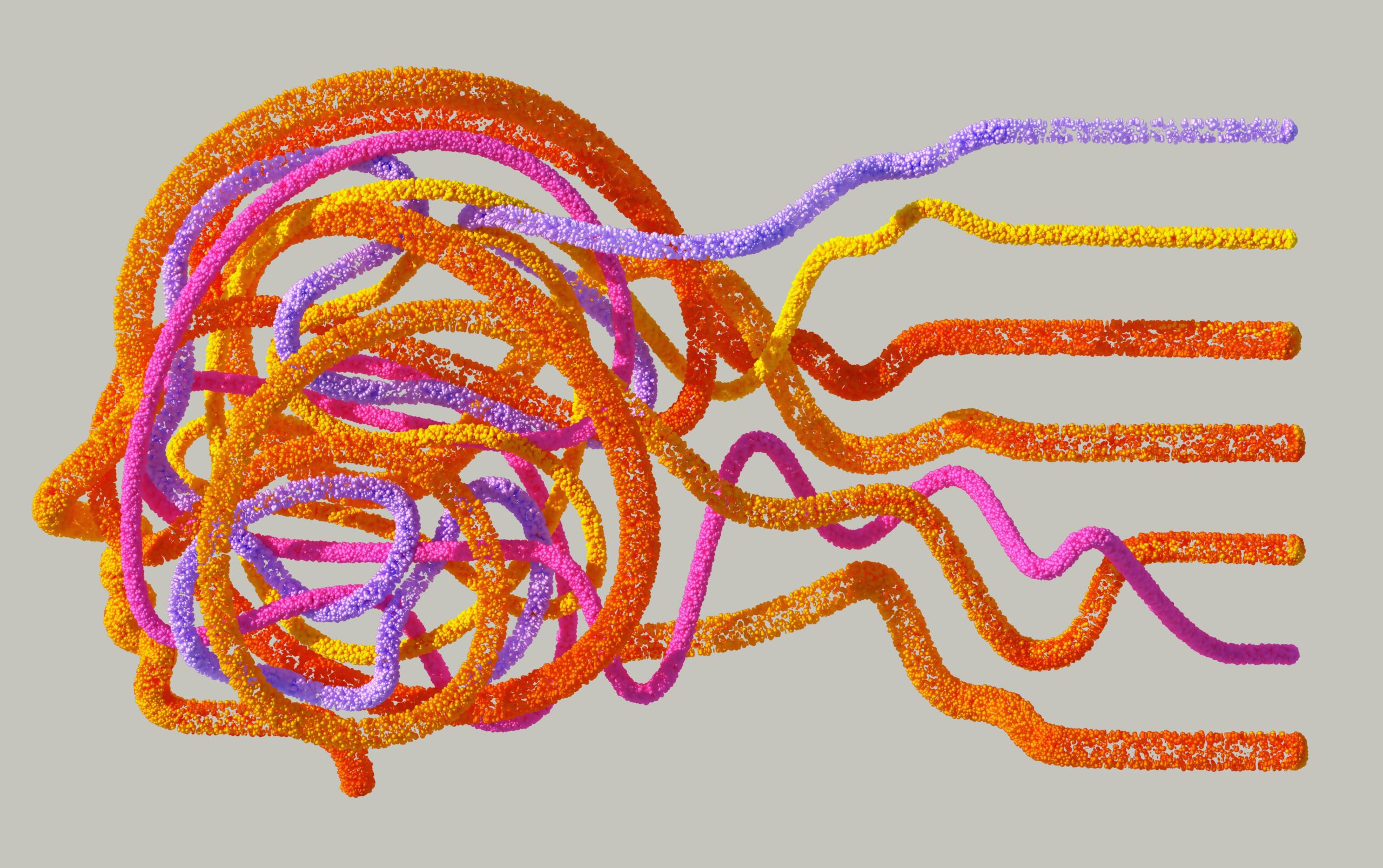
The field increasingly recognizes that pattern recognition success requires more than maximizing accuracy. Robustness, fairness, interpretability, efficiency, and privacy all matter for creating systems that provide genuine value while minimizing harm.
Future developments will likely focus on multi-objective optimization that balances competing goals rather than pursuing accuracy alone. This holistic approach acknowledges that pattern recognition systems exist within complex sociotechnical contexts where technical performance represents only one consideration among many.
The boundaries of pattern recognition accuracy may never be completely overcome, but understanding these limits enables more responsible development and deployment. By acknowledging what current technology cannot achieve, we create space for realistic expectations, appropriate use cases, and continued innovation targeting the most important challenges.
As pattern recognition technology continues evolving, maintaining critical awareness of its limitations ensures that these powerful tools enhance human capabilities rather than create new problems. The future lies not in achieving perfect accuracy but in developing systems that perform reliably within understood boundaries while serving human needs and values.